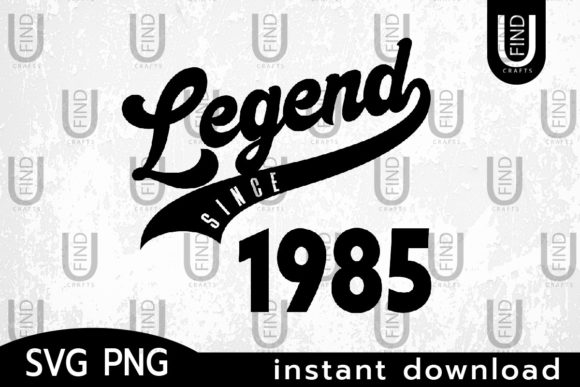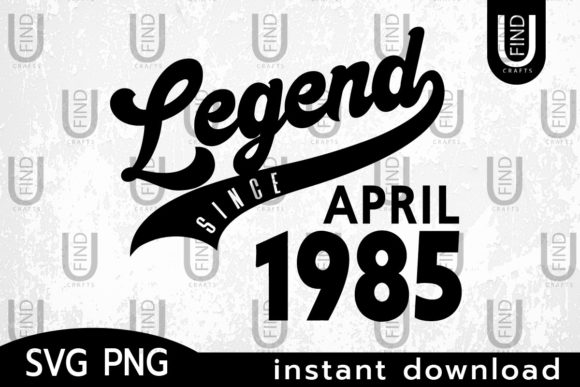
Vintage 1985, Legend Since April 1985
When I first opened the file for Vintage 1985, Legend Since April 1985, I didn't just see a birthday graphic; I saw a conversation starter. As someone who has spent years turning digital files into tangible stitched goods for clients and my own shop, my first instinct is always to look past the pretty preview image and ask: how will this hold up under the needle? The design immediately strikes me as having a distinct retro personality that feels less like a generic template and more like a curated piece of nostalgia. It carries a specific mood—one of established confidence and timeless style—that fits perfectly with the current trend of celebrating milestones with a vintage flair.
The visual weight of Vintage 1985, Legend Since April 1985 suggests it was born to be seen on textured surfaces. The typography, likely rendered in bold strokes, demands space and clarity. When I imagine this design stitched onto a canvas tote bag or a heavyweight cotton sweatshirt, the message lands with authority. It isn't trying too hard to be cute; it is declaring a legacy. For a craft business owner looking to create high-end personalized gifts, this design offers a level of sophistication that elevates a simple embroidered item into a keepsake. It works beautifully for a baby's onesie to mark their arrival year, or perhaps as a commemorative patch for a long-time employee or a beloved community member.
Real-World Application: From Screen to Stitch
Let's talk about a scenario I encounter often in my studio. A client comes in wanting a custom embroidered apron for their grandmother's 40th wedding anniversary, but they want something that nods to her birth year, 1985. They don't want a standard floral monogram; they want character. This is where Vintage 1985, Legend Since April 1985 becomes a strategic asset. The layout is clean enough to avoid cluttering the fabric but detailed enough to justify a larger hoop placement.
In practice, placing this design on a kitchen towel or a pillow cover requires careful consideration of the background fabric. If you are using a light-colored linen, the contrast will be sharp and the retro vibe will pop. However, if you are aiming for a dark fabric, you must ensure your thread selection provides sufficient coverage. The phrase "Legend Since" implies a story, and the embroidery needs to reflect that narrative depth. In a small boutique setting, selling a finished product featuring this design allows you to charge a premium because the design itself conveys quality and thoughtfulness. It transforms a mass-produced item into a bespoke creation.
I have also tested similar layouts on curved surfaces like baseball caps. While the text is generally legible, the curvature of a cap can sometimes distort the spacing of letters. With Vintage 1985, Legend Since April 1985, the kerning appears balanced, which usually helps when digitizing for curved projects. Yet, I would advise testing this on a scrap piece of cap material before committing to the final hat. The goal is to ensure the "April 1985" date doesn't get lost in the curve of the brim or the crown.
Navigating Fabric and Technique Challenges
Not every surface is a best friend to an embroidery machine. When working with Vintage 1985, Legend Since April 1985, there are specific fabrics that require extra caution. Stretchy knits, while popular for t-shirts and baby clothes, can warp if the stabilizer isn't chosen correctly. The density of the stitches in this design—if it relies heavily on satin stitch for outlines—might cause puckering on lightweight jersey unless you use a cut-away stabilizer that provides firm support.
Conversely, textured fabrics like heavy denim or fleece offer a rugged backdrop that suits the vintage aesthetic perfectly. However, you must adjust your needle size and thread tension to penetrate these materials without breaking the thread. If you are creating an embroidered patch using this design, you will need to consider the border. A design meant to be a standalone patch requires a different edge finish than one intended to be sewn directly onto a garment. The Vintage 1985, Legend Since April 1985 file likely includes a clean edge, but verifying the digitization for a merrowed border is essential if you plan to sell it as a detachable accessory.
One area to watch closely is the lettering. Small details in digital graphics can sometimes get lost in the translation to thread. If the design features fine lines or very thin serifs, they might not translate well on a large scale or on fuzzy fabrics. Always inspect the design in your software at 100% zoom before running the machine. If the letters appear too thin, you may need to manually adjust the stitch density or add a secondary outline to ensure readability.
Strategic Considerations for Sellers and Makers
For those of you running an Etsy shop or a handmade brand, the value of a design like Vintage 1985, Legend Since April 1985 lies in its versatility. It serves as a powerful tool for personalization. You can offer this as a base design and simply swap out the month or year for each customer, creating a unique product line with minimal additional effort. This efficiency is crucial for scaling a small business without sacrificing the handmade feel that customers crave.
However, commercial use brings responsibility. Before listing any finished products made from this design, you must review the licensing terms provided with the download. Does the license allow for unlimited sales of physical items? Are there restrictions on the number of units sold? These questions are critical for protecting your business. Assuming a design is free for commercial use when it is not can lead to costly legal issues down the road.
Visual appeal is also tied to presentation. When photographing your finished products, consider how the colors of the thread interact with the fabric. A gold thread on a navy background creates a regal, vintage look that aligns perfectly with the "Legend" theme. On the other hand, a white thread on a pastel pink shirt might feel too soft for the bold statement of the text. Experimenting with thread palettes can make the same design feel entirely different depending on the target audience.
Essential Pre-Production Checks
To ensure your project runs smoothly, I recommend a strict checklist before you start stitching. First, test the design on a scrap of the actual fabric you intend to use. This step reveals potential issues with puckering, thread breakage, or alignment that cannot be predicted by looking at the screen. Second, check the stitch density. If the design is too dense, it may become stiff and uncomfortable, especially for baby clothing or items worn against the skin. Third, verify the hoop size. Ensure the design dimensions fit comfortably within your machine's maximum hoop capacity, leaving room for proper stabilization.
Finally, always run a black-and-white mockup of your final product. Sometimes color choices can mask poor contrast or design flaws. If the design looks muddy in grayscale, it might struggle to stand out in real life. By taking these practical steps, you ensure that Vintage 1985, Legend Since April 1985 delivers the professional quality your customers expect. Whether you are making a gift for a family member or a batch of items for your next craft fair, this design offers a solid foundation for creating memorable, high-quality embroidered goods.